ASEAN NEXT 2025: Role of Infrastructure Technology and Innovation in Successful Manufacturing
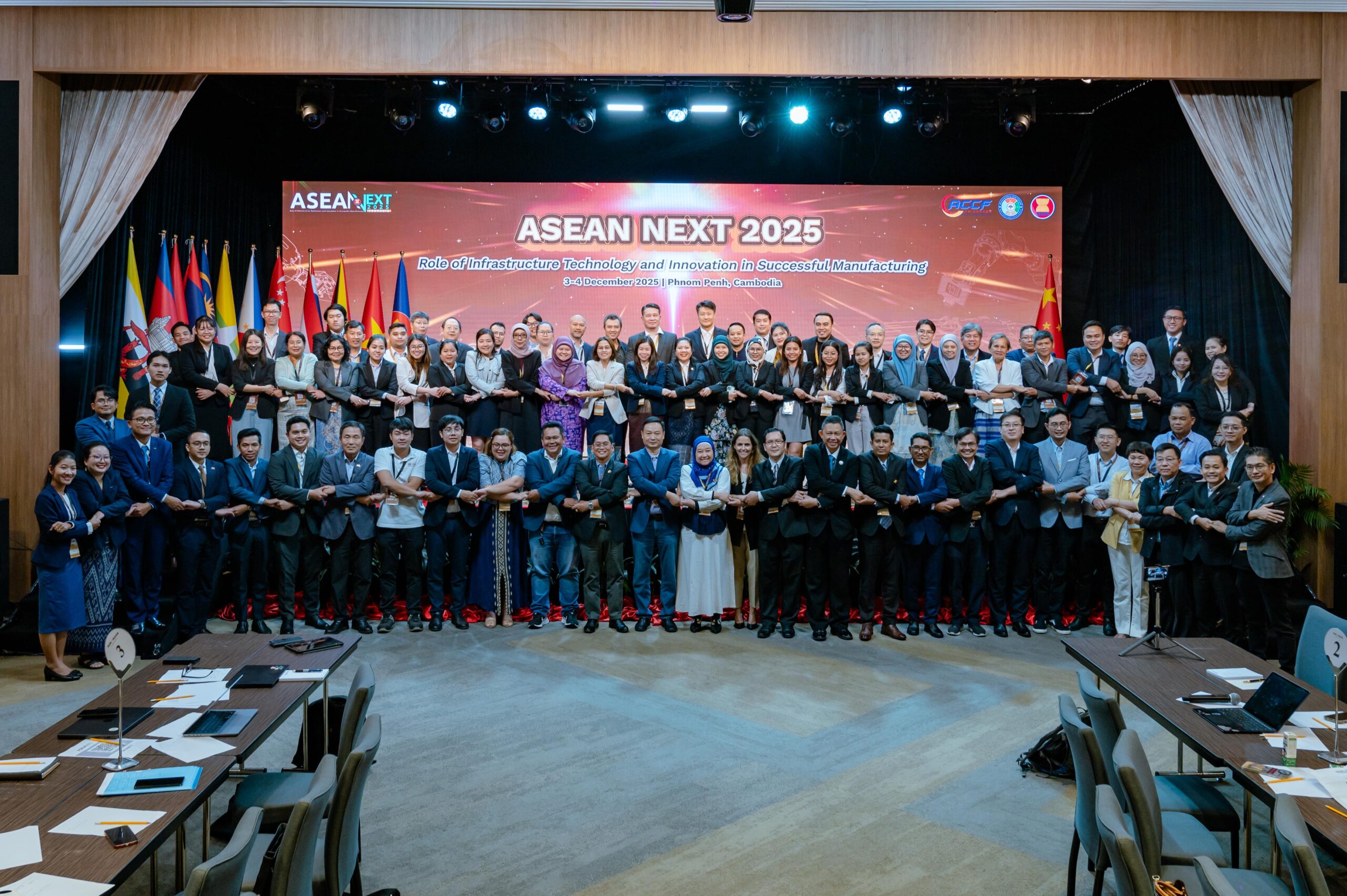
The ASEAN NEXT 2025 Forum, held under the theme “Role of Infrastructure Technology and Innovation in Successful Manufacturing,” was successfully convened on 3–4 December 2025 in Phnom Penh, Cambodia. Organised by the Ministry of Industry, Science, Technology & Innovation (MISTI) of Cambodia and supported by the ASEAN–China Cooperation Fund (ACCF), the forum brought together policymakers, researchers, and industry leaders to explore the transformative role of science, technology, and innovation (STI) in strengthening regional manufacturing, particularly within the ASEAN–China cooperation framework.
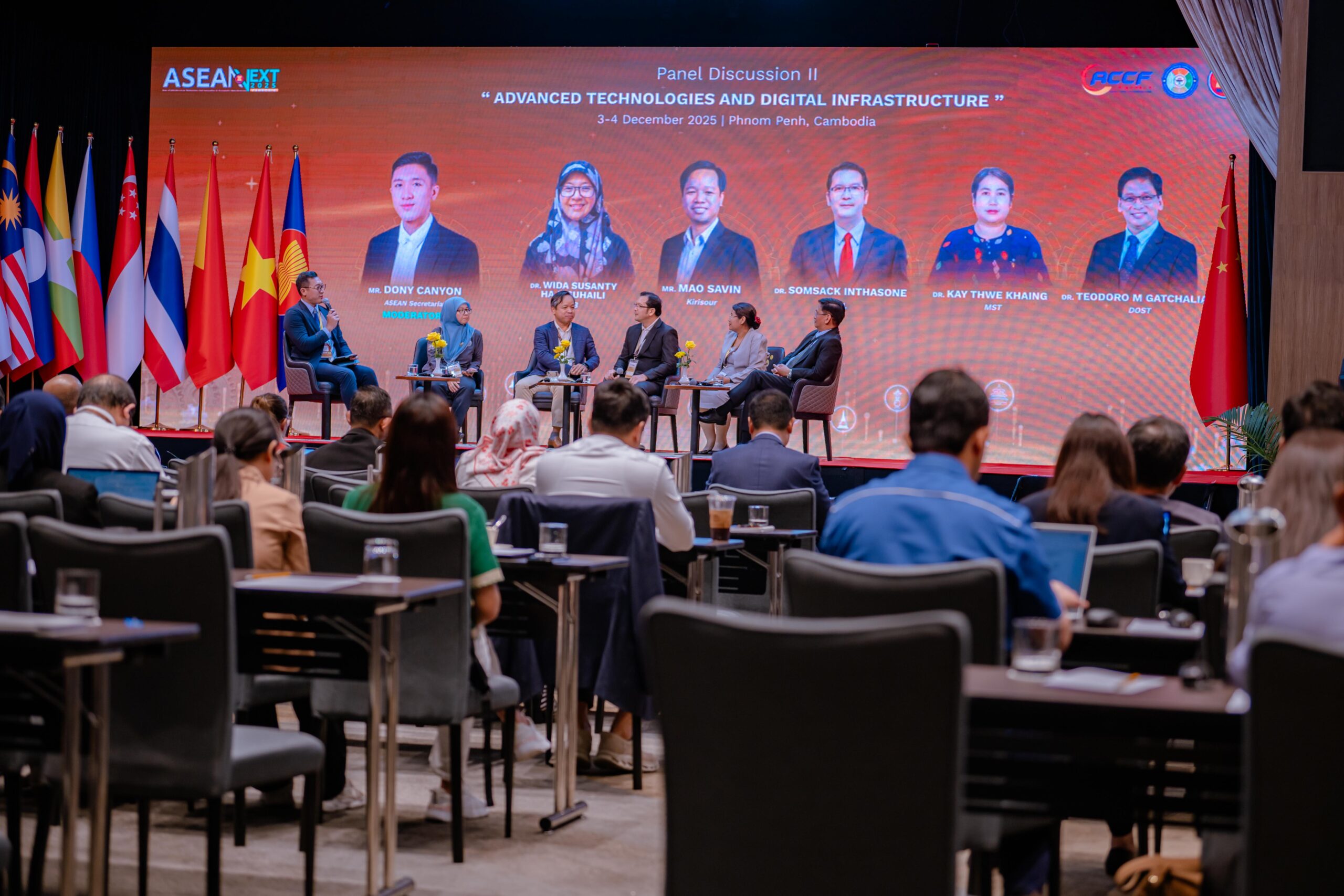
The forum gathered approximately 100 participants, representing ASEAN Member States, China, government ministries, start-ups, private sector representatives, and academic institutions. Over two days, the programme featured keynote addresses, panel dialogues, roundtable discussions, and networking activities, all designed to support national representatives in enhancing STI policy development, innovation capacity, and manufacturing capability across the region.
The opening ceremony commenced with recorded messages from H.E. Dr. Kao Kim Hourn, Secretary-General of ASEAN, Dr. Ir. Bosdiastoeti Ontowirjo, ASEAN Committee on Science and Technology and Innovation (COSTI) Chair, and Dr. Song Jianyuan, Department of Science and Technology of Guangxi Zhuang Autonomous Region of China, followed by an official launch led by H.E. Hem Vanndy, Minister of MISTI of Cambodia. In his speech, the Minister of MISTI of Cambodia, emphasized that an ecosystem built on research capability, digital readiness, and skilled human capital ultimately determines how quickly economies can adapt, innovate, and lead in an increasingly technology driven global landscape, an ambition that ASEAN NEXT 2025 seeks to advance.
In his closing remarks, the Secretary-General of ASEAN highlighted China’s substantial role as ASEAN’s largest trading partner for 16 consecutive years and a key partner in innovation and manufacturing development. He underscored major ASEAN–China cooperation milestones that will deepen industrial integration and expand cross-border digital collaboration. He also reaffirmed the importance of ongoing ASEAN-China initiatives, such as joint research programmes, which continue to advance technology transfer, talent development, and ASEAN’s manufacturing competitiveness.
ASEAN Member States and China reiterated their commitment to a collaborative STI roadmap that accelerates the adoption of advanced technologies, strengthens workforce upskilling, and promotes policy harmonisation. These priorities are being advanced through mechanisms such as ASEAN-COSTI, the China–ASEAN Technology Transfer Center, the Lancang-Mekong Cooperation Innovation Corridor, and the forthcoming ASEAN Plan of Action on Science, Technology and Innovation (APASTI) 2026–2035.